dating
Where to Meet a Man: Why the Place Doesn't Define Your Relationship
Does it really matter where you meet a man — dating app or real life? Discover why the place has almost no impact on the future of your relationship.
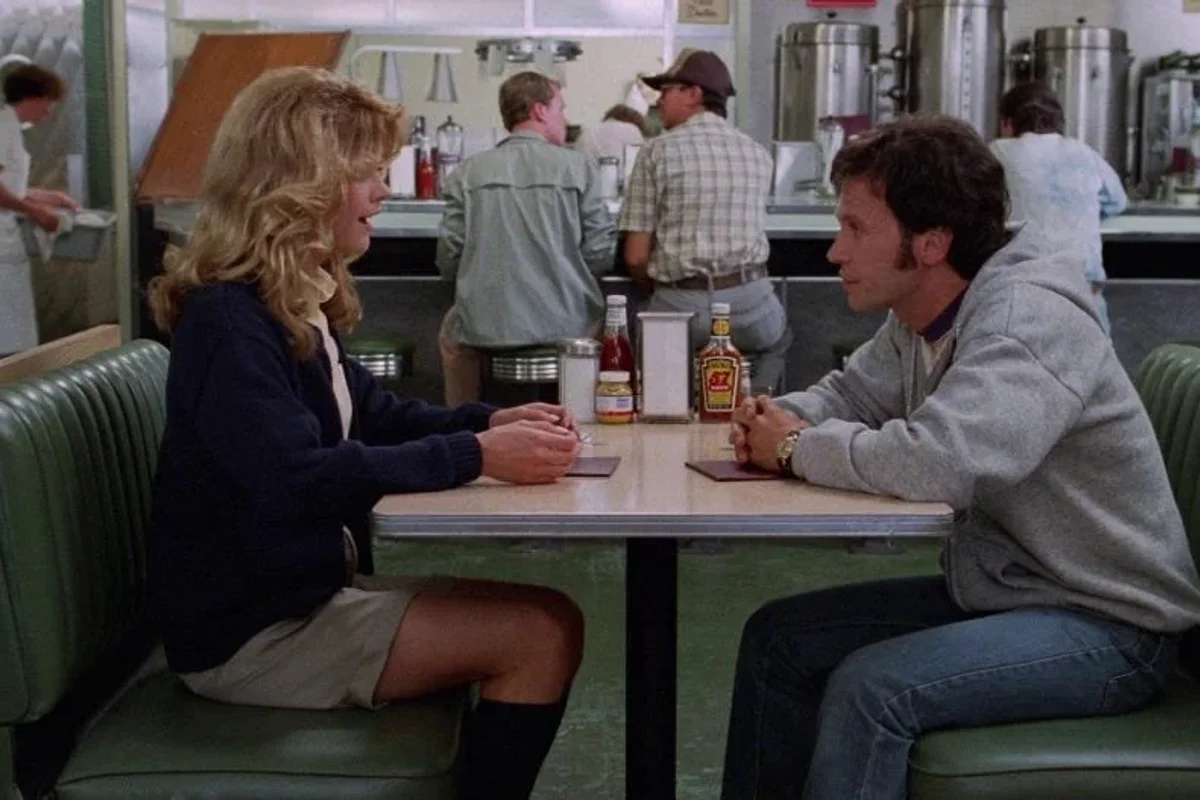
Over the past few years, a very popular idea has been circulating in the world of modern dating.
The idea that some ways of meeting a partner are naturally superior to others. That certain environments somehow produce better relationships. And that other contexts, by contrast, almost guarantee disappointment. It's a belief that has quietly settled into many conversations about dating, especially among women trying to understand where meaningful relationships actually begin.
According to this perspective, the place where a relationship starts already says something about its future. Dating apps are often described as superficial spaces where people judge each other too quickly and where serious relationships are rare.
Meanwhile, meetings in what people call "real life" are framed as more authentic and more romantic. A dance class, a dinner party with friends, a spontaneous conversation in a café or a bookstore all feel like purer ways to meet someone. Almost as if certain places contained a hidden reservoir of better partners.
It's an appealing idea. But it also rests on a misunderstanding. A big one.
A man remains exactly the same man whether you meet him in a bar, on a dating app, during a bachata class, or while waiting in line at a supermarket. The environment does not transform the person. It simply provides the stage on which the encounter happens. The lighting may change, the music may change, the context may change, but the personality, character, and emotional maturity of the person standing in front of you remain the same.
Which means the real question is not where you meet someone.
The real question is much simpler, and much more decisive: will you manage to create a connection with that person once the interaction begins?
Why Meeting a Man in Real Life Feels More Romantic (But Isn't Always Better)
Many women regularly tell me the same thing when we talk about dating today: "Men don't approach anymore." And to be fair, that observation is largely correct. In 2026, men approach far less often than they did fifteen or twenty years ago. Social norms have evolved, public behavior has changed, and many men have become more cautious about initiating interactions with strangers.
But behind this observation there is often another idea, one that remains mostly implicit. The belief that if a man does approach you in real life, then the encounter must be special. That it carries something spontaneous and almost magical. As if two people happened to cross paths at exactly the right moment, guided by some invisible romantic logic.
The problem with this interpretation is that it is built almost entirely from the female point of view. It rarely considers what is actually happening in the mind of the man who initiates the interaction. And once you look at the situation from his perspective, the mechanics become far more interesting.
Because for him, the moment usually has nothing magical about it. It is rarely destiny or romance suddenly taking over. Most of the time, it is simply a short internal moment where he pushes himself to act and thinks something very simple: "Go. Go. Go."
What Really Goes Through a Man's Mind When He Approaches You
When a man walks toward you in a café, in the street, or at a party to start a conversation, he is not floating in a romantic cloud guided by fate. What has just happened is much more straightforward: he made a decision. And for the overwhelming majority of men, that decision requires a significant psychological effort.
He has to step out of his comfort zone, accept the possibility of rejection, and place himself in a situation where he has very little control over the outcome. For many men, this moment is far from trivial. The central fear men experience in the dynamics of attraction has always been the same: rejection.
That rejection can happen at several stages. It can occur immediately when he approaches. It can appear during the conversation if the interaction feels awkward or unbalanced. And it can happen later when he suggests meeting again and the answer is no.
For this reason, many men experience dating as a kind of obstacle course. For confident and socially experienced men, the course can even become entertaining. For men who are more introverted, shy, or simply less comfortable socially, it often feels like repeatedly exposing their self-esteem to small shocks.
When you see a man walking toward you to start a conversation, you are only witnessing the final moment of this entire internal process. You see the action itself. What you do not see is the short but intense debate that happened in his mind seconds earlier.
Why "We Met by Chance" Is Often Just a Story We Tell Ourselves
When people tell the story of how they met, they often like to say that chance did things well. That two people simply happened to be in the right place at the right time. It creates the impression that an invisible romantic logic guided their trajectories through the city.
In reality, the mechanism is usually far more ordinary. A man walking through a large city crosses paths with dozens, sometimes hundreds, of women every day. The encounter only becomes real at the moment when he decides to interact. That decision is what transforms two people sharing the same space into an actual meeting.
Over time, some men even develop a real competence in this area. They have tried their luck dozens of times, sometimes hundreds, and they have experienced many refusals along the way. At that point two things can happen. Some men give up completely. Others gradually become far more resistant to rejection and develop genuine social skills.
For those men, a spontaneous encounter no longer feels like a miracle of fate. It simply becomes an interaction they know how to create.
How Romantic Comedies Created Unrealistic Expectations About Meeting Your Partner
Our imagination about love has been heavily shaped by popular culture. In romantic films, the meeting between two people is almost always extraordinary. It is presented as an improbable collision between two lives, a suspended moment where something unusual suddenly happens.
In movies like When Harry Met Sally, How to Lose a Guy in 10 Days, or series like Sex and the City and Emily in Paris, encounters are almost always accompanied by a special setup. A surprising situation. An unusual conversation that starts effortlessly. A moment that feels cinematic.
These stories slowly create the impression that great relationships always begin with extraordinary meetings. And that ordinary encounters somehow carry less potential.
In real life, the mechanism is much simpler. A meeting happens because someone decided to move toward the other person. And very often because the two people already share similar worlds, tastes, or lifestyles.
Do Dating Apps Work? Why They Changed Dating Without Destroying It
Dating apps have profoundly changed how people meet, but they have not changed the fundamental nature of relationships. What they have done is modify the starting dynamic.
In a traditional spontaneous encounter, the dynamic is very asymmetric. The man initiates the interaction and the woman decides whether she accepts or refuses the conversation.
On a dating app, the structure is different. Both people must actively participate in the process. Someone needs to create a profile, select photos, read descriptions, and write messages. In other words, the encounter becomes a collaborative process rather than a one-sided initiative.
This is also why many interactions disappear very early on dating apps. Many men create mediocre profiles. Many write messages that lack personality. Many conversations simply lose momentum.
This often gives people the impression that dating apps "don't work." In reality, they simply filter weak interactions much faster.
Where to Find Good Men: Why Quality Partners Exist in Every Setting
Another common belief is that some environments are filled with high-quality partners while others are full of problematic ones. It's an attractive idea because it suggests that if you simply go to the right places, you will naturally meet better people.
Unfortunately, reality does not work that way.
I have seen wonderful couples meet on dating apps. And I have seen perfectly natural encounters in "real life" turn into extremely complicated relationships.
One day, I coached a woman who had met a man during a daytime activity in a very socially respectable setting. Everything about the context made the meeting appear healthy and promising. And yet that man later turned out to have a very serious criminal history.
Situations like that are a simple reminder of one important truth: the quality of people is not distributed according to where you meet them.
Are Dating Apps Worth It? Why Ordinary Men Use Them Too
Many women have the impression that dating apps are mainly populated by undesirable or unserious men. This belief tends to collapse very quickly when you observe reality more closely.
Dating apps are also full of perfectly ordinary men. Not extraordinary. Not terrible. Simply normal people navigating modern life like everyone else.
Human beings generally choose the simplest path to obtain a result. Going out constantly, multiplying social activities, and meeting strangers requires time and energy. On a dating app, you can start a conversation with someone from your couch in just a few minutes.
This is the main reason behind the success of these platforms. Not a radical transformation of human relationships, but a simple logistical convenience.
What Really Determines If a Relationship Has a Future
In the end, the place where you meet someone is largely secondary. A meeting can begin in a bar, on the street, at a party, on an app, or even on a train. The scenery changes, but the mechanism remains the same.
Two people find themselves face to face and begin to explore whether something can emerge between them. Whether the conversation flows naturally. Whether curiosity appears. Whether a certain energy develops in the exchange.
That connection is what determines everything that follows.
Not the place where the meeting began.
This is why I often advise people not to judge too quickly the way someone entered their life. The essential part always begins at the moment when two people truly meet and discover, very simply, whether something real happens between them.

Yann Piette
Relationship coach since 2010 · 700,000+ women helped
Similar Articles

dating
Magnetic Attraction Between Two People: Why Some Connections Feel Intense
Why do some people create an instant magnetic pull while others, despite being perfect on paper, leave you cold? A coach explains the psychology behind intense connections.

dating
How Men Fall in Love: The 4 Hidden Principles of Male Psychology
A relationship coach reveals the 4 real mechanics behind how men fall in love: timing, uncertainty, investment, and admiration. What no one ever taught you about male psychology.

dating
Signs a Man Is Emotionally Attached to You (And What It Really Means)
Wondering if he's truly attached or just going through the motions? Here are the real signs a man is emotionally attached to you and why actions speak louder than words.